Four courses, four people, one room above a shop
SmartMoney Basics started because the same three questions kept coming up at kitchen tables, and the honest answers were sitting in the heads of people who had left the banking industry and had nowhere to put them.
It began as nine lessons written for one friend
Tamsin left a building society in 2022 after eleven years of pricing notice accounts, which is a job almost nobody outside the industry knows exists. For about a year afterwards she kept getting cornered at parties by people asking the same thing: their savings were sitting somewhere paying almost nothing, they knew it, and they had no idea what the alternative even looked like.
She wrote nine lessons for a friend who was trying to get a thousand pounds together on a nurse's rota. Worksheets, worked numbers, a rate she could go and verify. It worked, the friend passed it to two colleagues, and by the following spring there were forty people working through a set of unlisted videos on a borrowed platform.
The room came later. It sits above a shop on Fore Street, has one window that rattles, and is where every lesson on this site has been recorded since. Ifeoma joined from money guidance work in Exeter, Rasmus from the other side of the business entirely, and Desmond after thirty-one years managing branches, mostly because he could not resist correcting the statement course.

Nobody here is an adviser, and that is the point
Between them they spent more than fifty years selling, pricing or explaining the exact products these courses cover. None of them is authorised to tell you what to do with your money, and none of them wants to be.

Set the rates on notice and fixed accounts for a regional building society, which meant deciding each quarter how much of a rise to pass on and how quietly to let a bonus lapse. Wrote the ladder course to explain the side of that desk customers never see. Still stops at rate boards in branch windows.

Built the models that decided what a headline rate would be, how long it would last and what would happen on the anniversary. He is uncomfortably direct about that on camera and it is the reason his lessons land. Left the industry, kept the spreadsheets, teaches the long compounding course.

Nine years of one-to-one appointments with people whose budgets had already come apart, which teaches you to assume nothing and to skip the lecture. Her buffer course opens by saying the money is there so you do not have to be perfect, and that line does more work than anything else on the site.

Thirty-one years in branches across Devon and Somerset, latterly the one on the quay. Reads a statement faster than anyone we have met and can spot an annual charge hiding in a March column from across a table. Retired twice, unretired twice.
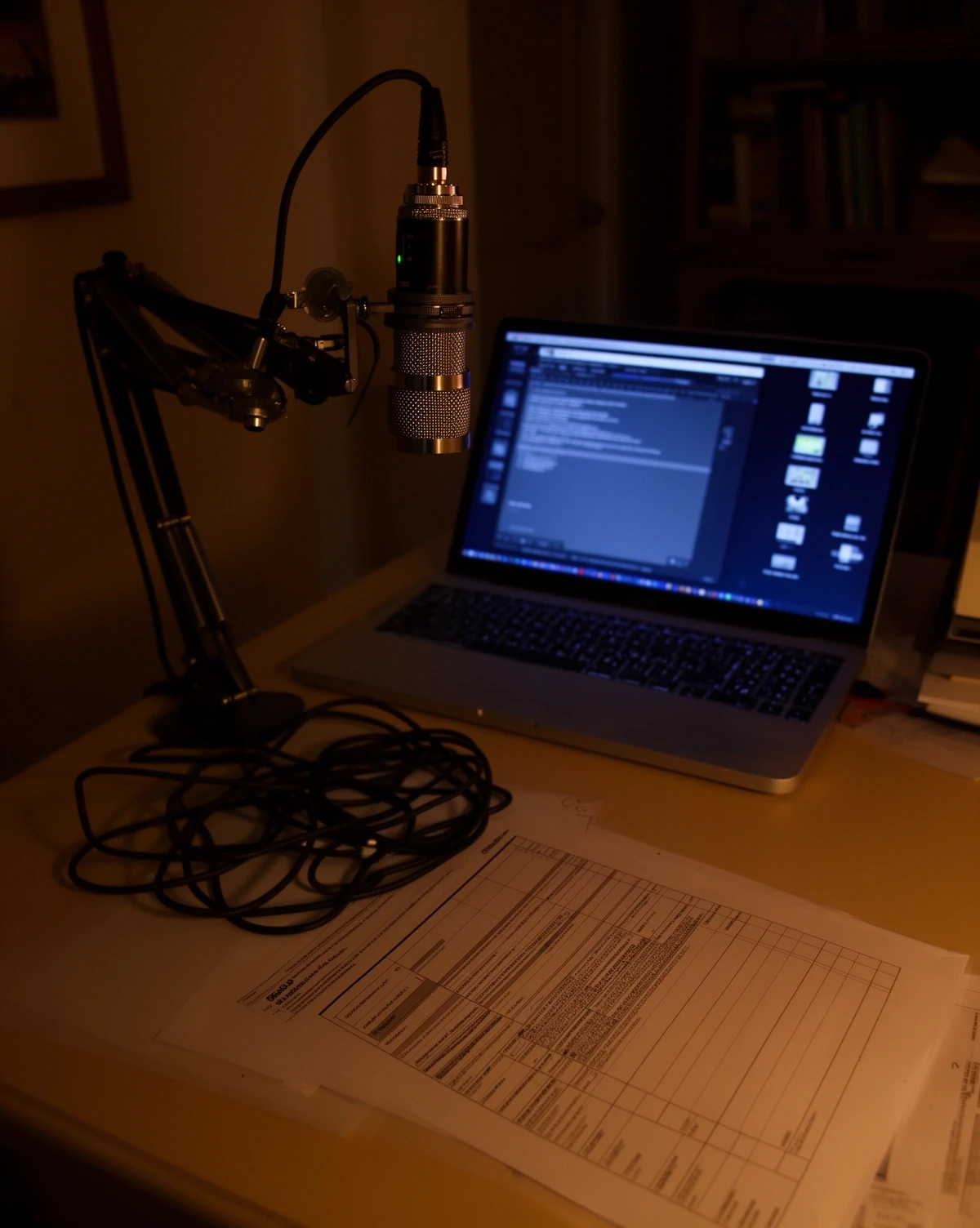
A screen recorder, a microphone and a lot of retakes
There is no studio and no camera pointed at anyone's face. A lesson is a screen recording with a voice over the top: a spreadsheet, a rate table, a worksheet being filled in one line at a time. Twelve minutes on average, twenty-two at the very longest, because past that people stop and never come back.
Arithmetic goes on screen as it happens, including the parts that come out wrong. In lesson eight of the ladder course Rasmus miscalculates a break penalty and then works out why, and we left it in on purpose. It is the single most emailed-about lesson we have.
Every lesson where a number matters carries the date it was recorded, and there is a queue on the wall of the ones due a re-record. Two ladder lessons are on it now because a reviewer called Yusuf pointed out the rates had aged, which is exactly the sort of email we want.
Five things this project will not do
Written down partly for you and partly for us, because every one of these has been suggested by somebody with a marketing background.
We will never tell you which account to open
Not in a lesson, not in a reply to an email, not if you ask nicely three times. The moment we name a product as the right one for your circumstances, it stops being education and becomes something we are not authorised to do. What we will do is explain how the thing works well enough that the choice becomes obvious to you.
No affiliate links, anywhere
Not one bank, comparison site or app pays us anything. If a provider is named in a lesson it is because the example needed a real name, and we get nothing whether you go there or not.
No shares, no crypto, no property
Four courses about cash and deposits. That is the whole shop.
No upsell after you buy
You get an invoice, a login, and answers when you ask questions. There is no coaching call at the end of the last lesson, no community to join, and no email sequence trying to move you up to something more expensive, because nothing more expensive exists.
No countdown timers
Prices change perhaps twice a year and never at midnight. If a course is cheaper it is because we lowered the price, not because a clock is running.