Your savings account is quietly losing you money.
Short courses about deposits, buffers, and the arithmetic banks assume you'll never sit down and check. Written by people who used to sell these products from the other side of the counter.
Twelve months of access from the day you pay. No subscription, no drip-feed email funnel, no upsell to a "mastermind".
Interest earned over twelve months on rates we tracked through 2025. An illustration, not a recommendation, and rates move constantly.
Not motivation. Arithmetic, worksheets, and somebody to email when it doesn't add up.
I've sat through enough "money mindset" webinars to last a lifetime. None of them told me what AER meant. So that's roughly what we built instead.
A rate you can go and check yourself
Every worked example names the account type and the rate it assumes. You can open a comparison table in another tab and argue with us. Several people have. Two of them were right, and the lesson got rebuilt.
Your statements, not case studies
Two of the four courses ask you to open your own banking app in lesson one. Fictional families with tidy budgets teach you nothing.
Worksheets that survive a printer
One page. Black ink. No decorative gradients eating your cartridge.
One inbox, answered by the tutor
Questions go to [email protected] and land with whoever recorded the lesson you're stuck on. Usually answered same day, sometimes next morning if Tamsin's teaching.
Nothing to renew
You buy a course. It's yours for a year. There is no tier above it and no coaching call waiting at the end.
The unglamorous middle of personal finance
people have taken at least one course
finish what they start. The rest mostly stall around lesson four
recorded lessons across all four courses
of access, then it expires. Nothing renews on its own
Pulled off our own dashboard in June. I'd rather print the 87% than round it up to "nearly everyone", which is what the last agency wanted on this page.
Four courses. Take one, take all four, or take none and just read the free worksheet.

The First £1,000
Nine lessons on scraping a buffer together when there isn't much spare. Where to park it so you can still reach it on a Sunday, how big it needs to be for your rent rather than someone else's, and why the "three months of expenses" rule falls apart the moment your income goes lumpy.
- What a buffer is for, and what it isn't for
- Working out your real monthly floor
- Instant access accounts, and why the headline rate drops after a year
- Standing orders that move money before you see it
- Keeping the buffer separate from the spending account
- What to do the first time you have to spend it
- Rebuilding without guilt maths
- When £1,000 isn't the right target
- Where to go next, honestly

Deposit Ladder, Plainly
AER against gross, notice periods, what the FSCS limit actually covers when you hold two accounts at banks that turn out to share a licence, and how to stack fixed terms so you're never fully locked away from your own money. This is the spreadsheet-heavy one. Bring a laptop, or at minimum something wider than a phone. I rebuilt lessons six and seven in April because the old versions quietly assumed everyone had a lump sum sitting there waiting, and almost nobody does.
- Gross, net, AER: the three numbers on one page
- Why the headline rate has an asterisk
- Instant access, notice, fixed: what you give up for each
- FSCS cover and the shared banking licence trap
- Building a four-rung ladder from scratch
- Starting a ladder with £300 a month instead of a lump sum
- What happens when a rung matures and rates have fallen
- Breaking a fix early, and what it costs
- Tax: the personal savings allowance in practice
- Joint accounts and split ownership
- Keeping a record HMRC would accept
- Reviewing the ladder once a year in twenty minutes

Statement Forensics
Ninety days of your own bank statements, read properly. That's the entire course.
- Getting ninety days out of your banking app as a file
- Sorting by merchant instead of by date
- Finding the subscriptions you forgot about
- Annual charges that only appear once and hide
- The difference between a bad month and a bad pattern
- Card fees on foreign spending
- Overdraft interest, calculated line by line
- Direct debits versus continuous payment authorities
- What to cancel first, and what to leave alone
- Writing your own one-page summary
- Doing the whole thing again in ninety days
The Boring Decade
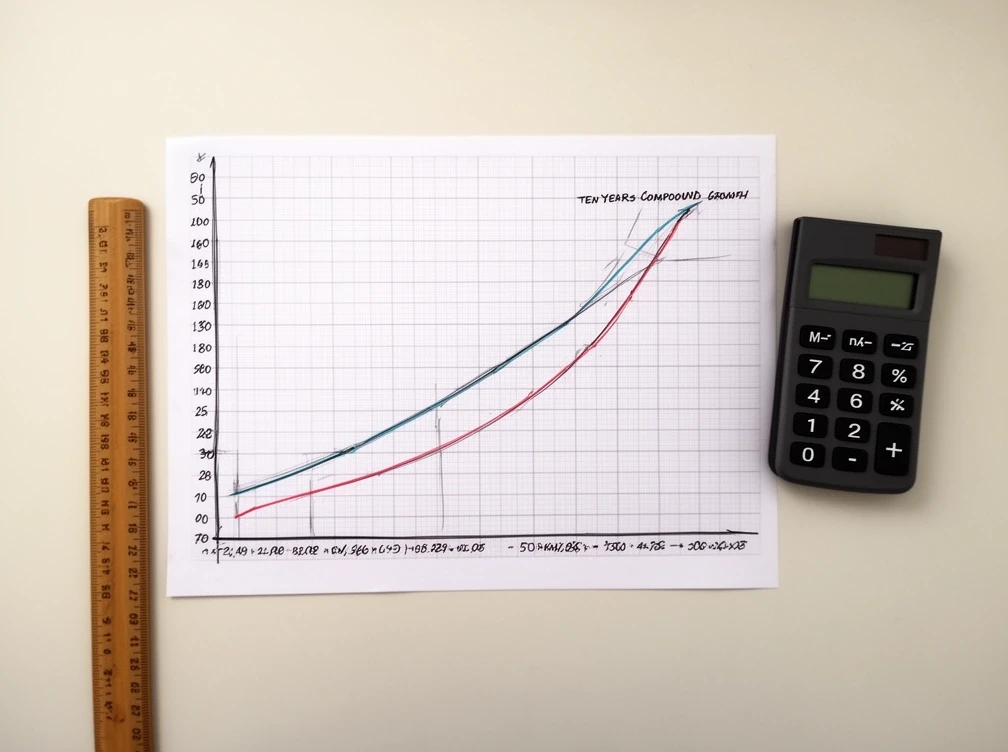
What compounding does across ten years when nobody touches the pot, and what it does when you dip in twice a year for a holiday and a boiler. Covers cash ISAs, the personal savings allowance, and the point where a deposit stops keeping pace with prices. There is no stock picking in here at all. If that's what you came for, this is the wrong shop and I'd rather say so now.
- Compounding drawn on paper before any spreadsheet
- Monthly versus annual interest, and why it barely matters
- The cost of one withdrawal a year, over ten years
- Cash ISAs: the rules as they stand
- Personal savings allowance and where it runs out
- Inflation, plainly, without the graphs everyone shares
- Real return: the only number that matters here
- When cash is the right answer
- When cash stops being the right answer
- Regular saver accounts and their catch
- Sinking funds for known future costs
- Sharing a goal with someone else's money habits
- Reviewing once a year without redoing everything
- What this course deliberately doesn't cover
Twelve minutes, one page, one number to work out.
Every lesson is built the same way, which sounds dull and is deliberate. You stop having to learn the format and get on with the content.
A short video
Twelve minutes on average, twenty-two at the very longest. Screen recording plus a voice, no talking head, no intro music.
One worksheet
Single side of A4. You fill it in with your own figures, not example ones.
A worked example, start to finish
We show the arithmetic on screen, including the bit where it comes out wrong and gets corrected. Rasmus kept a mistake in lesson eight of the ladder course on purpose and it's the lesson people email about most.
A full transcript
Searchable, downloadable, and the reason a fair few people never watch the video at all.
Somewhere to ask
A question box at the bottom of each lesson. It goes to the tutor's email, not a ticket queue.
Five ways people lose money without ever noticing it happened
None of these are dramatic, which is exactly the problem. They cost forty quid here and ninety there, and nothing on the statement ever flags it.
Letting the introductory rate roll off
Most easy-access accounts pay a headline rate for twelve months and then drop to something close to nothing. Nobody writes to tell you. I watched an account go from 4.6% to 1.1% on its anniversary and the customer only caught it because the monthly interest line looked wrong on the app. Put the date the bonus ends in your calendar on the day you open the account, not the week you remember to.
Splitting money across brands that share one licence
Four accounts, four different names in the app, one banking licence underneath the lot. Protection applies per licence, so the split bought you nothing. Checking takes ten minutes on the Bank of England register.
Keeping the buffer in the current account
If you can see it, you'll spend it. Different bank, no card.
Paying tax on interest you needn't have
As the rules stand, the personal savings allowance covers a slice of interest before anything is due, and once you're past it a cash ISA often earns its keep. Rasmus does that arithmetic properly in lesson nine of the ladder course, with the point where it stops being worth the bother.
Holding out for the perfect account
Best-buy tables change weekly. A decent account opened on Sunday beats a perfect one you never got round to.
Put a number in and watch it do almost nothing for a while
This is the calculator from lesson one of The Boring Decade, lifted out and left here. Change the figures. The bars are one year each.
Interest compounded once a year, deposits added monthly, tax ignored. It's a teaching tool and nothing more. Real accounts have withdrawal rules, bonus rates that expire, and tax that applies past your personal savings allowance.
Four people who used to work behind the counter
Nobody here is a financial adviser and nobody here will tell you what to buy. What they can do is explain the products they used to sell, which turns out to be rarer than it should be.

Spent most of the 2010s pricing notice accounts for a building society in the south west. Left in 2022. Still can't walk past a rate board in a branch window without stopping.

Built the models that decided what a headline rate would be and when it would quietly drop. He's blunt about that on camera, which some people find uncomfortable and most find useful.

Nine years of one-to-one appointments with people whose budgets had already gone wrong. She wrote the buffer course, and it shows: it assumes very little and skips nothing.

Thirty-one years in branches across Devon and Somerset. Reads a statement faster than anyone I've met.
How this works, from basket to first lesson
Add a course to the basket
The basket sits at the bottom of the screen and follows you down the page. Nothing gets charged there.
Send the order form
Name, email, phone, and how you'd rather pay. No card details go through this website at any point, which is a deliberate choice and also why the form looks a bit old-fashioned.
Takes about ninety secondsWe send an invoice
By email, usually within a couple of hours during the week. Bank transfer details are on it. If you picked card, someone rings you instead and takes it over the phone.
Access opens
Once payment lands, you get a login and the whole course at once. Not drip-fed weekly. You can watch the lot on a Saturday if that's your idea of a good time.
12 months from that dayWhat sixty-four to a hundred and forty-nine quid actually buys
People ask why it isn't free, which is fair, because some of it is. Here's the comparison with the free option left in.
A course isn't advice, and it's cheaper for that reason
A regulated adviser looks at your circumstances and carries responsibility for what they recommend. Different service, different rulebook, different price. We explain how the products work and you make the call. If it's the first thing you need, don't buy the second.
The free material is genuinely good
MoneyHelper is government funded and its savings guides are better written than most of what's sold. Read those first. If they answer your question, you've saved sixty-four quid and I'd rather you did.
What you're paying for is order and worked numbers
Free guides tell you what an AER is. They don't sit you down, in sequence, with your own figures in a spreadsheet and show you the point where a fixed term stops being worth the lock-in. That's the gap, and it's the whole business.
The adviser and seminar figures are what we've seen quoted locally this year, not fixed prices. Ours are fixed, include VAT, and never renew.
What people wrote afterwards
Pulled from the feedback box, lightly trimmed for typos and nothing else.
Moved my money on a Tuesday afternoon. Sixty-one quid better off by Christmas, for the price of one course and an hour of faffing.
I bought this expecting to be told off. That's what every money thing I'd tried before did, in a nice voice. Ifeoma's course opens by saying the buffer is there so you don't have to be perfect, and something about that made the whole thing possible. I did lesson two on my phone on a night shift. Took me eleven weeks to get to £1,000 rather than the six the worksheet suggested and that turned out to be completely fine. My sister's doing it now.
Good. The spreadsheet is worth the money on its own. Four stars because two videos still have the old rates in them.
Found £340 a year of subscriptions in ninety minutes. Genuinely annoyed at myself, not at the course.
Three things that come up in almost every email
actuallyOn £8,000 that's about £40 a year, every year, for one afternoon of admin you never repeat. Whether that's worth it is your call, but the number should be a number and not a shrug.
actuallyProtection comes from the FSCS limit and it applies per banking licence, not per brand. Two accounts at two names that share one licence share one limit. People find this out at the worst possible moment, and it takes about ten minutes to check.
actuallyThings don't settle down. I've been waiting since about 2019.
Asked often enough to write down
If yours isn't here, email it. We add the good ones to this list and the person who asked gets told when we do.
No.
We're not authorised to give financial advice and we don't want to be. The courses explain how the products work and how to compare them so the choice is yours. If you want a recommendation tailored to your circumstances, you need a regulated adviser, and that's a different thing entirely.
Not a word. Four courses, all about cash and deposits. The Boring Decade touches on why cash stops keeping up with prices over long periods, but it stops there and points you elsewhere.
Partly. The arithmetic travels anywhere. The specifics don't: FSCS cover, cash ISAs and the personal savings allowance are UK rules and roughly a third of the material leans on them. Several people in Ireland have taken the buffer course and got on fine. The ladder course, less so.
Bank transfer against an invoice, card over the phone, or an invoice made out to an employer if they're covering it. No card form on this site. We'd rather not hold that data, and honestly, at our size we shouldn't.
Fourteen days, money back, no explanation required. You can have watched the whole thing. Eleven people have asked so far and eleven got refunded, though one of them told us why and we rewrote a lesson because of it.
Yes, constantly, and we're honest about it rather than pretending otherwise. Any lesson where the rate matters carries a recorded-on date, and the worksheets are built so you drop today's rate in yourself. Two videos in the ladder course are due a re-record. Yusuf was right about that.
Four things we hold ourselves to
A short list, because a long one is usually a sign nobody intends to keep it.
Fourteen days, no reason asked for
Email us the order reference and the money goes back to the account it came from. You can have watched every lesson first. Nobody here has ever argued about a refund and we're not going to start now.
Back in your account within 5 working daysStale numbers get corrected, not buried
Every lesson where the figure matters carries the date it was recorded. If a rate or an allowance shifts far enough to change the answer, we either re-record inside thirty days or put a dated correction over the top of the video. Two ladder lessons are sitting in that queue as I write this.
Your email address stays here
Never sold, never rented, never passed to a partner list. The only things you'll receive are the invoice, the login, and a reply when you ask something.
The price on the page is the price
VAT in, no card surcharge, no renewal, and no tier sitting above the one you bought. If we drop a course price within thirty days of your order, you get the difference back without having to notice or ask.
Applies from the date on your invoiceTell us where to send the invoice
Whatever's in your basket comes through with this form. No payment is taken here.
Nothing in here yet. Pick a course from the shelf above and it'll show up on this docket.
Prices include VAT. Digital courses, so there's no delivery to add. Refundable for 14 days from the day access opens.
Start with the £64 one if you're not sure
It's the shortest, the cheapest, and the one people email about most often afterwards. If it turns out you already knew all of it, ask for the money back and go straight to the ladder course.
SmartMoney Basics sells educational material. Nothing on this website and nothing inside any course is financial advice, a personal recommendation, or a strategy to follow. We are not authorised or regulated by the Financial Conduct Authority and we do not arrange, advise on, or sell financial products of any kind.
Rates, tax rules, allowances and protection limits change without warning, and any figure shown here or in a lesson is an illustration recorded on a particular date. Always check current terms with the provider before you move money.
Every financial decision you make after taking a course is yours alone, and so is the outcome. Where courses mention markets or long-term investing for context, understand that investments can fall as well as rise, that you may get back less than you put in, and that past performance tells you nothing reliable about the future. Money held in cash accounts can lose buying power over time when prices rise faster than interest.
If you need advice about your own circumstances, speak to a regulated financial adviser. If you're struggling with debt, free and impartial help is available from national debt charities and from the government's MoneyHelper service.